What isn’t remembered never happened: Serial Experiments Lain

May 5, 2011

Serial Experiments Lain is a strange series; take that from a strange man with strange tastes. It’s an experience which is intriguing, disturbing, frustrating and depressing in equal parts but ultimately rewarding providing you can see it through to the end.
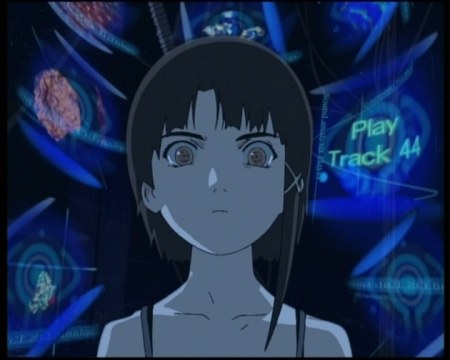
It’s true that the cyberpunk is often plundered by anime for its sci-fi aesthetic and dystopian themes, but what sets Lain apart from these neighbours is the thought with which it addresses the genre’s ideas. Rather than using it as a mere dressing for action and entertainment it concerns itself heavily with the underlying technological and social concepts along with a dose of existential philosophy and theology. There’s an almost novelistic feel to its approach reminiscent of something William Gibson might write, never being afraid to challenge the viewer or experiment in ambiguous territory.

At the same time, this makes it so obtuse and idiosyncratic in places that many will be put off by its sheer lack of accessibility; Lain demands your full attention and reflection to make any real sense of it. I still find parts of the story infuriatingly oblique even after a second viewing and yet in spite of this I still find something about it utterly compelling. Like I said: strange.

Based in a world with an alternative take on the internet known as ‘the Wired’ what’s perhaps most startling about this setting is its uncanny resemblance to the network society of today. Aspects of it remain intentionally outlandish, but the base depiction of its pervasive social importance is more relevant today than when series originally aired in 1998. Even the wired enabled phones aren’t too far off our own modern equivalent.

In contrast to this, Lain herself initially has little understanding or interest in “connecting” with others over the wired or in reality for that matter. I’m sure mention of having a 14 year old schoolgirl as a protagonist is likely to provoke eye rolling from certain quarters, but our central character here is somewhat removed from the usual cookie cutter pubescent. Alienated and unresponsive to the point of appearing autistic; Lain’s initially vacuous nature makes her perfect to introduce the details of the setting through while her social ineptitude and distant family quickly draws viewer sympathy. In essence, she has more in common with the anti-hero detective figures of cyberpunk literature than most anime heroines.

The style of the animation is also distinctly offbeat. The character designs are closer to realism than the medium usually offers with a colour palette which is more often restrained to drab browns and greys than colourful alternatives. At the same time an atmosphere of discomfort is nurtured by an overpowering sense of the mundane, while elsewhere surreal little touches hint at something unpleasant lurking beneath this everyday veneer. Shadows are speckled with red blotches perhaps in reference to blood, while the seemingly omnipresent dark cabling of the wired fractures and webs scenery with its humming menace.

The story is kick started when e-mails are sent around Lain’s class allegedly from a girl Chisa who committed suicide just a week before. The rest of her classmates take it to be a distasteful prank however Lain, intrigued by what she’s heard dusts of her neglected Navi (their equivalent to a PC, not a blue cat alien :p) and investigates. Discovering a similar e-mail she questions the departed as to why they died, the ominous reply being that “god is here”.
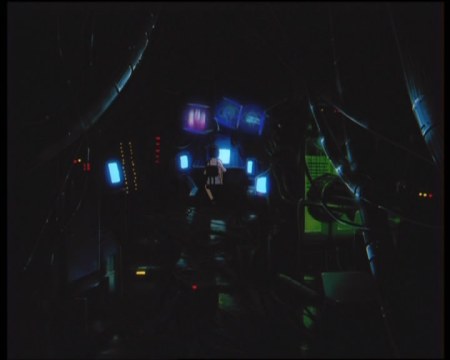

Throughout the following episodes Lain gradually becomes drawn into a mystery involving a group of hackers known as the ‘Knights’ in worship of this internet god and the ruthless ‘Tachibana Labs’ who are seemingly set on thwarting them. Vague hints at the underlying plot and dark machinations are thrown up in a manner typical of a techno-conspiracy thriller, however far more interesting than this – though ultimately tied to it – is the development of Lain herself.

As she delves deeper into matters her computer skills rapidly develop, visually represented as her outdated Navi is replaced with a top of the line model which in turn is progressively modified; growing from a desktop device to a formidable setup which fills the entire room. Her personality also quickly develops as she becomes bolder and more assertive,  managing to befriend a classmate Alice and beginning to behave more sociably.

All this could be seen as puberty cyberpunk style, but at the same time stranger things accompany it. Rumours filter back to Lain about her appearing in places she’s never been behaving wildly out of character, while her reputation on the wired starts to take on an inexplicably legendary quality she never seems to have earned. Worse still, she is plagued by increasingly nightmarish hallucinations of phantom figures in reality, appearing to originate from the wired itself.
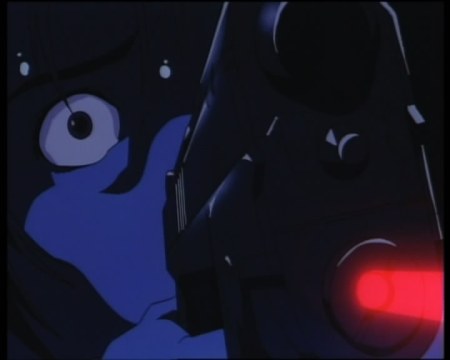
Things come to a head as stories of “the other” Lain suggest she spread scandalous rumours about Alice, while the hallucinations begin to manifest for other people besides herself. It’s also the point at which the series seemingly starts to unravel, buckling under the weight of its own mystery poised to irrepairably fall apart into pretention, when something even stranger happens:

It starts to make sense.

Just as I’d convinced myself the series no longer had any idea where it was going the seemingly unrelated threads mesh together with a coherency which pulled the proverbial rug out from beneath me. The central idea – that ‘god’s’ plan is to break down the barrier between the wired and reality – admittedly pushes credibility even under the banner of ‘cyber-fantasy’ but is presented with such immersive conviction that it’s rendered wholly believable from a dramatic standpoint. It also makes for a worryingly relevant allegory of our current society in which the internet is of increasing importance in day to day life, as Lain herself eerily phrases it: “no matter where you go, everyone’s connected.”

As reality begins to crumble the self appointed ‘god’ finally reveals himself to her as Masami Eiri; a deceased scientist responsible for the wired upgrade causing the bizarre incidents. Formerly believed to have killed himself under a train, he now resides as a consciousness in the wired – a sinister figure of assured control and near unlimited arrogance with the goal of making the world cast off flesh in favour of a supposedly limitless existence over the network.       
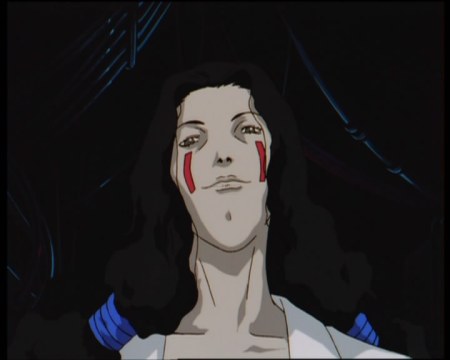

More importantly though, light is finally cast on Lain’s role in these events. Isolated once again through the destructive rumours regarding her alter ego, she questions Masami as to who or what she really is, with the response being that she is “software”. Created by him to help implement the breakdown between wired and reality, Lain is a sort of physical embodiment of the process; something which explains the abnormal development of her technical proficiency and initial alienation. We’re never offered a clear-cut explanation as to whether she’s a GM construct, a machine or some form of shared hallucination originating from the wired though it’s a vagueness which I feel actually preserves much of the series’ credibility; keeping the details ambiguous and leaving the viewer to decide, while also making the whole internet god/reshaping reality plot line easier to swallow.

With Masami set on using Lain to implement his plan, he initially tries to coax her into cooperation but failing this resorts to threats and force – Lain’s defence and crushing blow to his networked ego being that his assurance as an omnipotent being is undermined by reliance on ideas and physical hardware created in the real world, which he is now fatally powerless to interact with minus a body. Thus it is that ‘god’ implodes in a startlingly violent puff of logic.

Far from resolving matters though, this climax only serves to create a larger dilemma for our central character as she is effectively left in charge of the wired and by extension (thanks to Masami’s tinkering) reality. Assuming the responsibilities of a god she is offered the chance of reshaping reality to suit her own desires, but ultimately rejects it in order to fix the lives of her friends and family which have been left largely in tatters at this point thanks to bizarre events surrounding the wired – the unfortunate implication being that she herself won’t be remembered and “what isn’t remembered never happened.”
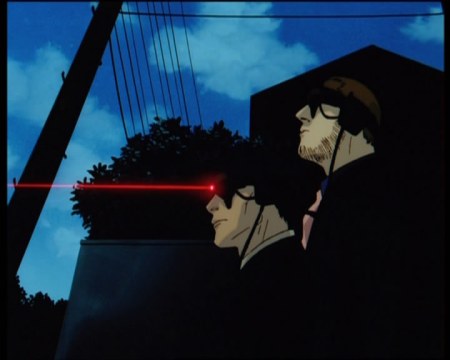

Perhaps more than any other element in the series, the ending is left open to personal interpretation – inevitably garnering a few aggressive internet forums in the process – but my own feeling is that Lain herself is intended as a metaphysical representation of the network society, her different egos paralleling those of the internet: some wise, some unpleasant some insightful and some disturbing. Considered as an embodiment of this, Lain represents the near unlimited potential of the net counterbalanced by the inevitable faults inherited from its creators.

Serial Experiments doesn’t always hit the mark, often being strange for the sake of strangeness but it’s a negligible footnote when the series achieves so much along the way. Comparable with everything from Neuromancer to The Matrix perhaps its greatest triumph is that it maintains such an original voice amongst the genre while quietly worming its way under your skin. Uncompromising and fearlessly unconventional it’s definitely up there with cyberpunk’s finest.     


Your future’s all used up: Touch of Evil

May 1, 2011

Putting aside that Touch of Evil (1958) is a firm favourite of mine within the noir genre, it also makes for another fitting continuation to my roughly chronological progression of subject films. Not only does it seem to follow on from Strangers on a Train (1951) in terms of the genre’s rising focus on character driven narrative but it’s also considered by many to be one of the last examples of film noir’s golden era (expect spoilers). 

Given the respected reputation it possesses today it’s hard to believe the film was a B-movie, but this may also of been what allowed boundaries to pushed; dabbling in even darker subject matter and muddier morality than its predecessors. Orson Welles – who both directed and co-starred in the picture – is said to have predominantly shot at night to minimise studio interference, only to have the film forcibly recut by Universal against his wishes. All in all, there’s a lot of confusion regarding the different versions (of which there are three), aspect ratio and intended narrative – hardly helped by my viewing from an ancient VHS copy – but as far as I can tell it’s the 108 minute alternate version from 1976 which I’ve watched.

And what a movie it is. Opening with an extended crane shot tracking a car rigged with a bomb we are gripped from the first few seconds and sucked into a world of murder, corruption and deceit. I noted with my previous noir subjects that they typically begin during day light before later descending into the darkness as the climax approaches, however here by starting in darkness it’s as though the film acknowledges a darker tone and sense of foreboding within these opening minutes.

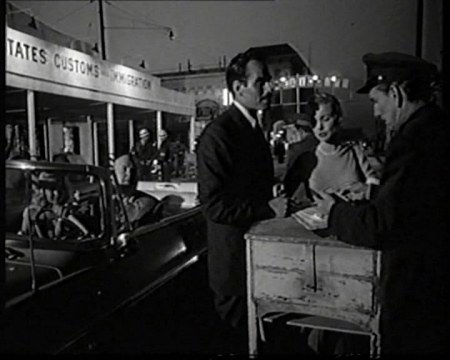
As the car in question explodes crossing the Mexico-US border, taking a powerful construction contractor with it the plot’s key players assemble at the scene of the crime: Miguel ‘Mike’ Vargas, an idealistic Mexican narcotics officer is torn away from his newlywed to investigate the bombing when American Police Captain Hank Quinlan (played by a heavily made up Welles) intervenes, aggressively taking charge of the matter.

For starters, the nationality of these two leading men introduces an uncomfortable element of racial tension to the proceedings. Though the choice of Charlton Heston made up as a Mexican for Vargas suggests pressure from Hollywood to ‘play it safe’, the handling of the racial undertones is far from immature or one sided. Quinlan’s intolerance is highlighted in his objections to Vargas speaking Spanish in his presence, while even Vargas’s American wife ‘Susan’ displays a tendency to racially stereotype, condescendingly referring to a gang youth as “Poncho”.

As we enter the day again and the two reluctantly cooperate in the interrogation of a Mexican suspect things take a critical turn when Quinlan claims to have discovered dynamite in the home of the accused. Identifying the box it was found within as an empty one he previously overturned, Vargas accuses Quinlan of framing their suspect marking a key change in direction for the narrative. To some extent both are detective figures attempting to solve the initial bombing, but as matters develop and the conflict between them escalates, their interests gradually shift from the crime itself over to smearing each other’s reputations.  Soon it becomes clear that the bomb was merely a catalyst for something far more sinister.

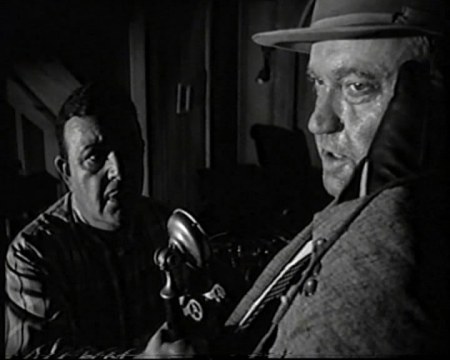
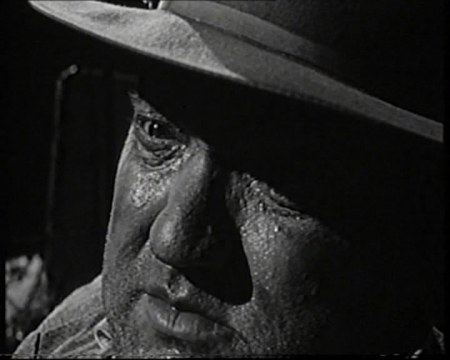
As Vargas sets about searching for incriminating evidence of his opposite number’s corruption in the police records, Quinlan is approached by ‘Uncle’ Joe Grandi – local crime lord and target of the ongoing dope crackdown – with a mutually beneficial scheme to incriminate Susan in a drug scandal and ruin Vargas in the process, an offer which proves just too tempting. There’s never much doubt that Quinlan is the real villain of the piece and that Vargas is our hero, but at the same time Welles’s antagonist has a level of character complexity that isn’t often seen in the medium making things less clear cut than they might first seem. As villainous as he may initially appear with his abrasive manner, ruthless scheming and grotesque obesity it’s hard to find Quinlan entirely unsympathetic.

As matters begin to spiral out of control we hear more about him from Pete Menzies; his long time partner on the force; Depicting him as role model for his own career, Menzies enthusiastically tells Susan at one point how Quinlan got his “game leg” taking a bullet meant for him along with several other mentions of him overcoming alcoholism. Being treated to a glass of Bourbon by Grandi in spite of repeated claims that he no longer drinks, we witness the start of a steep decline that is ironically as likely to draw empathy from viewers as it does horror.

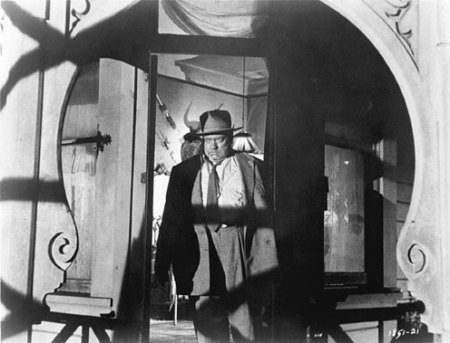
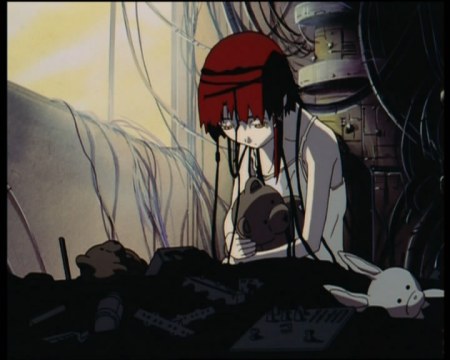
Alan Silver and James Ursini’s The Noir Style (1999) offers a particularly insightful take on how this duality is represented within the visuals in relation to the image above:

 ‘Bulk also adds vulnerability to Detective Hank Quinlan (Orson Welles) in Touch of Evil (1958). Quinlan is a man trapped by the web of violence and deceit he has woven around himself. While his massive figure seems about to explode from an excess of poisonous fluid springing from his corrupt nature, his face sags as he realizes his plans have back fired and he is now caught in his own web. The frame exhibits several layers of metaphorical traps. In the foreground he is framed by the arch of the porch with its curving designs resembling the jaws of a monstrous animal. Further within the shot the door frame acts as a tighter trap, enclosing his formidable figure. And finally, two shadows cut across his body, one horizontally over his midriff and one diagonally at his knees. These foreshadow his imminent doom. In the background Welles the director places a pair of horns, strategically positioned to give the impression that they are growing out of his head, a none too subtle demonic reference.’  

(Silver, Ursini, 1999, p71)

Indeed; while the film embodies most of the crooked camera angles, heavy shadowing and symbolism which had become a genre standard by this point Touch of Evil has its own distinct look, perhaps thanks to the offbeat setting or Welles’s directorial eye resulting in striking often disturbing imagery which complements the story’s tone perfectly.

As night descends once again and Grandi’s gang forcibly intoxicates Susan, the shift back to a darker tone is once again emphasised as Quinlan takes things a step further. No longer content with a pinning a mere drug charge on his foe, consumed by alcohol and anger he strangles his accomplice in order to frame Vargas’s wife for murder – something which in turn echoes the alleged murder of Quinlan’s own spouse by the same method.

Again, this draws viewer sympathy alongside their disgust, but more disturbingly it also draws comparisons between our hero and antagonist with the suggestion that Quinlan may once have shared a similar outlook on law enforcement as his enemy – something lent further weight as Vargas descends into a bar brawl in search of his own missing wife. His fall isn’t so great certainly, but the parallel is definitely there; for all their differences Vargas and Quinlan have a worrying amount in common by the end of the film.

The finale is slightly reminiscent to that of The Third Man (1949) in the way that Menzies – finding irrefutable evidence of his partner’s corruption and murderous behaviour – is forced to confront his idol with lethal consequences. However, while Harry Lime was portrayed as an unrepentant villain, it’s hard not to feel sorry for Hank Quinlan in his dying moments. In what may well be the film’s most powerful moment, Quinlan hears the wire recording of him shooting Menzies in panic, forcing him to face up to what he’s done for the first time, and finally acknowledge his downfall.

All this would have made for a traditionally satisfying Hollywood ending seeing evil punished and bravery rewarded, however Welles makes a bold move by denying us this in the final moments of dialogue.  Arriving on the scene following Quinlan’s death, the assistant district attorney explains how the original suspect has confessed to the bombing, that in spite of everything “Quinlan was right after all”. It’s a final twist which throws former conceptions of good and evil into uncertainty, making an already hazy depiction of morality into a mire.

This is perhaps the essence of what makes Touch of Evil such an admirable piece of enduring film; it presents compelling, complex characters casting aside the traditional ‘crime and solution’ formula in favour of a personal descent into chaos that leaves no one entirely blameless or clearly to blame for that matter. It’s a movie more concerned with where things go wrong rather than how they are solved, which seeks to overturn polarised notions of good and evil.

Who really has the ‘touch of evil’? Anyone who’s desperate enough it would seem.


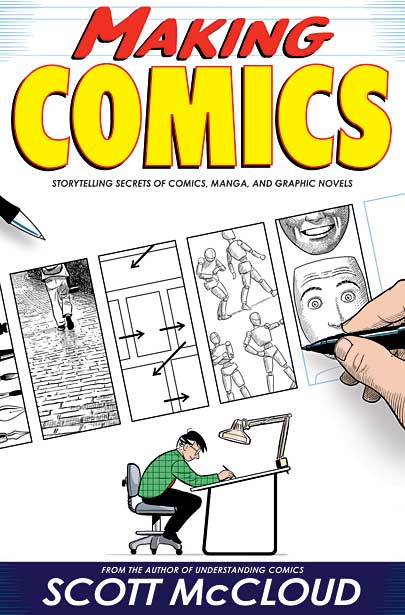
There are No Rules: Scott McCloud’s ‘Making Comics’

April 19, 2011

As production draws near and my fingernails get reduced to nibbled down stumps I’ve made an effort to read more in the way of instructional texts in order to address  some of the project’s more practical concerns. Having been recommended Scott McCloud’s Making Comics on several occasions I sought it out and gave it a read, only to be surprised at how little instruction it actually contains.

Before you jump to conclusions and assume this is a spiteful condemnation, let me set things straight: it’s not, at the same time though I will stress that this is not a do or die rule book. Refreshingly, McCloud is more concerned with channeling his readers efforts and giving them pointers on what to look out for than telling them exactly what to do. To use his own words ‘There are no rules’. Which is not to say he doesn’t lay out some specific dont’s and principles to work by, but the text offers an open minded view on the medium remaining considerate of the diverse approaches and working methods it encompasses.

There’s a substantial amount of depth to these considerations too, with each chapter breaking down an area of the comic making process before exploring further subdivisions of each. I’d previously been reading Will Eisner’s Graphic Storytelling and Visual Narrative which I will not devalue in any way – Eisner’s reputation speaks for itself after all – but was more concerned with the general approach taken than the details of graphic production. By comparison Making Comics carefully addressed  these aspects, forcing me to rethink most areas of my project while also alerting me to some I hadn’t even considered (the height chart from a few posts back was a near direct result of this).

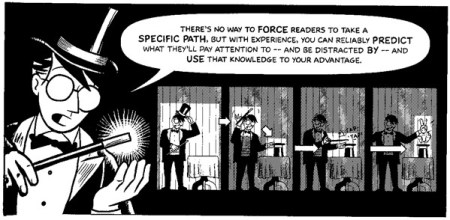
It’s also a genuine pleasure to read thanks to the comic presentation McCloud uses. For this type of book there’s a remarkable amount of entertainment and humour along the way; it’s never dull or preachy while the author isn’t afraid to poke fun at himself or the contrivances of the medium – in a sense it’s less an instructional book and more an instructional graphic novel. The images serve a more important purpose though of illustrating the concepts discussed, not just telling you how something might be done but showing it as well. There’s no confusion or real difficulty involved in reading, everything is always clearly explained and demonstrated.

It has certainly been a valuable addition to my research and given me greater confidence and understanding as to how I’ll go about the terrifying prospect of production. Just about anyone starting out in comics or graphic novels would do well to give it a look: it’s more enjoyable than a ‘how to‘ book should have any right to be and may just surprise you in what it makes you realise about your own work.


Criss-Cross: Strangers on a Train

April 11, 2011

As a movie I’ve wanted to see for some time and a part of film noir’s most revered canon Alfred Hitchcock’s Strangers on a Train (1951) struck me as a good follow up on research formerly restricted to 1940’s output, examining how the genre evolved and what features began to become more or less heavily pronounced.

In terms of narrative, of my previous subjects it’s Double Indemnity (1944) that the setup here has most in common with: again rather than having a murder gradually uncovered the emphasis is placed upon the plotter, the act itself and ensuing attempts to cover it up and hide the truth – an unsurprising comparison since Raymond Chandler was involved with scripting both features, there’s even a similar focus on trains and echoes of “Straight down the line” in the ominous phrase near the start “Criss-cross”. In spite of these similarities though, the scenario is a great deal more ambiguous than that of Double Indemnity or indeed any of my earlier subject films.

While formally considered a part of the genre thanks to its typically high contrast style and use of shadow Strangers on a Train has no real mystery and lacks a strong detective figure in the narrative. Instead, viewer interest arises from the moment by moment tension of seeing our hapless protagonist Guy Haines drawn progressively deeper into the life and mind of antagonist Bruno Antony. The aforementioned ambiguity arising from the lack of clear cut motive for his actions: after proposing the “perfect murder” to the unimpressed Guy wherein they both kill a problematic figure in the other’s life, he takes matters into his own hands – secretly killing Guy’s wife Miriam before attempting to blackmail his unwilling partner to kill his father in return.

While he’s allegedly motivated by animosity towards his parent and Guy does stand to benefit from Miriam’s death, our villain doesn’t appear to be driven by conventional reasoning or other common tropes such as greed or romance. To the very end he remains unpredictable, his motives questionable – written off as being insane by most other characters perhaps the mystery is exactly what drives him.

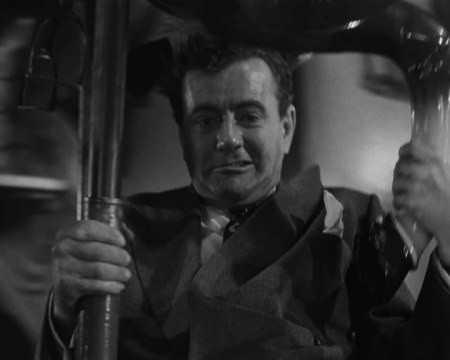
In relation to this the film might be considered a comment on violence as entertainment. In the opening dialogue on the train Bruno talks about how he has “a theory that you should do everything before you die” while the plot is bookended with scenes at a fun fair – the first sees Bruno murder Miriam following a ride on the tunnel of love, but of particular interest to me is the second featuring a fight on an out of control carousel, something comparable to the larger story and matters getting out of hand as Bruno seeks progressively greater thrills. It’s an allegory which gives the movie a greater sense of cultural context and the era’s moral boundaries which were being continually tested, continually under increasing pressure to be pushed.

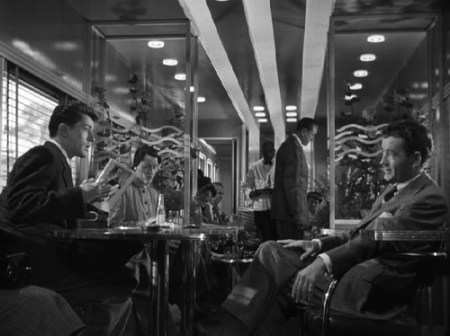
Being a Hitchcock production the direction is naturally meticulous with layers of symbolism in almost every shot, however a couple of visual features specifically caught my eye. A simple but effective touch none the less is the opposing light dark appearances of the hero and villain: in a couple of the scenes in which they face off Guy will be dressed in light colours while Bruno will be contrastingly dark. Beyond obvious representations of good and evil more interestingly this suggests a negative image of each other, drawing attention to their emotional similarities but also emphasising their considerable moral differences.

Bruno’s black suits also result in some striking shots when seen from a distance against a light background – a solitary dark presence immediately recognisable even as a little more than a vague figure. Inevitably window blind shadows feature heavily too, but it’s intriguing that they are rarely cast across Guy’s face, whereas Bruno’s features are continually fractured by dark lines hinting at his villainy and possible madness.

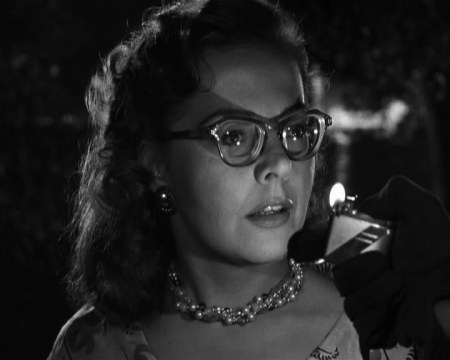
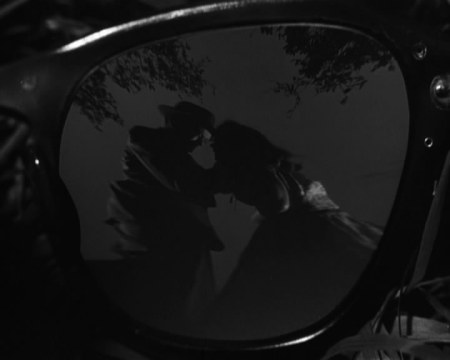
Perhaps my favourite reoccurring motif though is the prominence of glasses in connection to the film’s initial murder shown in the reflection of the victim’s spectacles; besides being an immensely innovative touch and remarkable technical feat for the time it makes an interesting suggestion of untold guilt on the villains part. Bruno’s later fit like reactions to the resemblance of the bespectacled Barbara to Miriam being both a vital plot point but also an indication of some remorse in the matter and greater character complexity. On the other hand, perhaps Hitchcock’s main reason for showing Miriam being strangled in a reflection was a way to duck under the era’s censorship; allowing the unfettered brutality of the murder to be seen thanks to the excuse of it being indirect.

While the plot largely eschews the detective/mystery traditions of the genre, perhaps what makes the movie a true film noir is its supreme play against expectations throughout. Scenes such as Bruno holding Guy at gunpoint, or the tennis match sequence carefully sustain tension with each being resolved in a truely unexpected manner. It’s no exaggeration to say these scenes are still likely to provoke plenty of armrest gripping and biting of nails today, while at the same time it’s slightly alarming how well it stands against many supposedly innovative modern thrillers.

After such a wealth of chaotic excitement it’s something of shame that Hitchcock seems forced to settle for a relatively typical Hollywood conclusion but regardless, as an innovative take on a story of murder and blackmail Strangers on a Train presents a compelling example of Noir which steps outside of the tried and tested formula and offers something slightly different to the genre’s usual fare.


Big in Japan: Akira

April 4, 2011

Being a good three years or so since I last watched Akira it was with fresh eyes that I approached Katsuhiro Otomo’s landmark anime, resulting in a viewing experience which proved familiar but also differed from my former recollections. The film is ostensibly cyberpunk according to its themes and presentation however the main reason I was compelled to include it in my research is down to its setting, scenery and mechanical design.

While the era stylings and cel animation are immediately identifiable it’s a testament to its high production values and meticulous attention to detail that Akira remains visually astounding to this day even by modern standards. Being made before digital animation became common practice makes it all the more impressive; characters and machinery are almost always in motion, brought to life by uncannily fluid animation while the backgrounds are complex and frequently baffling in scale.

Outside the quality of the production though, what really surprised me was how well the design work holds up. Bygone date of World War III aside the movie presents a future that’s remarkable but maintains an odd sense of believability thanks to some of the restraint shown in its concepts. True to cyberpunk’s tendency of presenting familiar real world elements in warped ways there’s something of modern skyscraper design evident in the buildings, the difference arising from their terrifying scale, pan up shots revealing them to effectively block out most of the skyline. Special mention should go to the range of locations presented too with neon glitz and sterile labs juxtaposed against seedy bars and rundown streets. The world portrayed is clearly advanced but suffers from the same problems any major city would today.

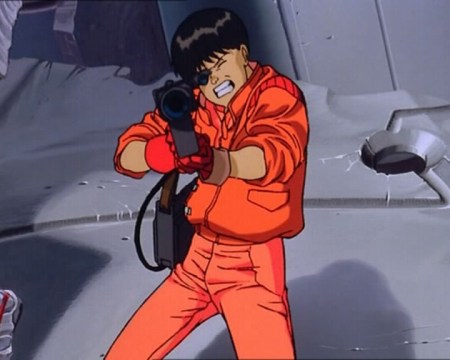
The colour palette also caught my eye as being remarkably rich thanks to much of the film being set at night with coloured light sources atmospherically illuminating scenes. Eschewing the uniformly bright colour schemes many would associate with ‘cartoons’ lighting swings between harsh oranges and reds against deep blues, purples and browns for shadowing. In effect it emphasises the film’s dark mood during the opening bike chase while making the neon cityscape and bikes themselves contrastingly pop out within the compositions.

Akira’s unsettlingly gritty sense of realism is not just down to design or colour though. Certainly much of the later content surrounding Tetsuo’s powers steps outside of this considerably but I found much of the background activity a great deal more disturbing than on my previous viewing. Incidental moments of violence don’t pull any punches in what’s shown while the near continuous anti-government rioting (and its merciless suppression) are worrying in their resemblance to real life news footage. It shocks and gives the film an aggressive political undertone while also enforcing the sense of a world extending beyond the main characters, with wider implications to the disasters taking place. The opening and ending scenes of Neo Tokyo’s destruction carry all the more weight thanks to parallels with the Hiroshima and Nagasaki bombings (while uncomfortably calling the recent earthquake and tsunami devastation to mind); the carnage is never mindless or unfeeling as a result. Essentially, by establishing a credible universe the viewer is tricked into caring through comparison with genuine catastrophes.

Considering the film’s main thread, there are two sides to the story. On the one hand we have the broader political and philosophical implications of power out of control while on the other there’s a more focused personal tale underpinning the bigger picture. The experimentation on Tetsuo by the government and development of his psionic powers represent a larger theme regarding mankind’s irrepressible hunger for advancement and understanding, both he and the foregone Akira being grasps towards what is best described as ‘godhood’. While this pushes over into a realm perhaps more fantastical in nature than typical sci-fi the connection with technology is clearly affirmed throughout. The mechanical arm Tetsuo attaches in place of his missing one leans towards cyborg concepts while the continual barrage of ineffectual countermeasures the army unleashes both revels in and dismisses civilisations accomplishments.

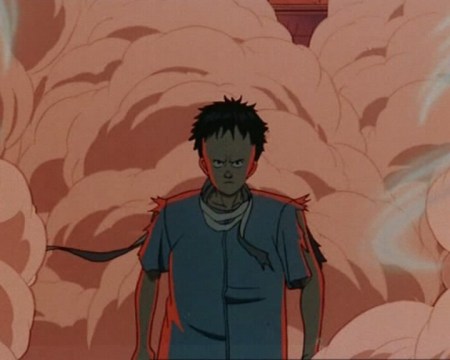
What makes this more than a soulless disaster movie though is the running conflict between Tetsuo and his childhood friend Kaneda: the former being driven to supplant the eponymous Akira out of a deep seated sense inferiority, the latter out for revenge against his former friend over the death of a fellow biker. Both characters transform over the course of the movie with Kaneda changing from arrogant biker to something of a hero figure while Tetsuo gradually becomes more and more of a monster – as much through his own anger as by the experiments of the government conducted on him, metaphorically and visually.

I must admit that the ending formerly baffled me and to some degree still does with even Otomo allegedly admitting he was forced to scale back and compromise. However approaching it again with an open mind I found it to be more satisfying than I remembered, being comparable perhaps to 2001: A Space Odyssey with the suggestion of some form of ascension or rebirth taking place and a surreal light tunnel sequence recalling the one in Kubrick’s film. This theme of rebirth is given further weight by Tetsuo’s final grotesque mutation, seeing him become a swelling blob akin in some respects to a gigantic baby, a horrifying demonstration of uncontrollable power, the resurrection of Akira meanwhile fulfilling a role which draws parallels to the resurrection of Jesus in Christian theology.

In conclusion: Akira represents much of Japanese animation’s strengths and weaknesses, a visual feast packed with ideas and political charge which can also be alienating due to its more brutal moments and high ambiguity. Regardless, taken aside from the hype and misguided preconceptions it lives up to the legend as a landmark in animation paving the way for the likes of Ghost in the Shell and a great deal of ensuing cyberpunk.

tsunami