Criss-Cross: Strangers on a Train

April 11, 2011

As a movie I’ve wanted to see for some time and a part of film noir’s most revered canon Alfred Hitchcock’s Strangers on a Train (1951) struck me as a good follow up on research formerly restricted to 1940’s output, examining how the genre evolved and what features began to become more or less heavily pronounced.
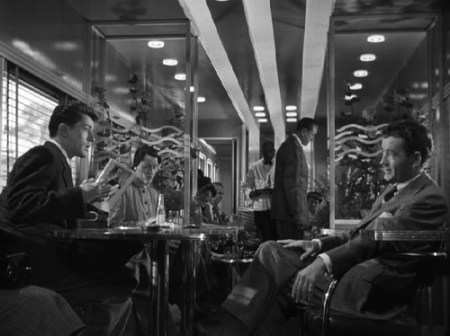
In terms of narrative, of my previous subjects it’s Double Indemnity (1944) that the setup here has most in common with: again rather than having a murder gradually uncovered the emphasis is placed upon the plotter, the act itself and ensuing attempts to cover it up and hide the truth – an unsurprising comparison since Raymond Chandler was involved with scripting both features, there’s even a similar focus on trains and echoes of “Straight down the line” in the ominous phrase near the start “Criss-cross”. In spite of these similarities though, the scenario is a great deal more ambiguous than that of Double Indemnity or indeed any of my earlier subject films.

While formally considered a part of the genre thanks to its typically high contrast style and use of shadow Strangers on a Train has no real mystery and lacks a strong detective figure in the narrative. Instead, viewer interest arises from the moment by moment tension of seeing our hapless protagonist Guy Haines drawn progressively deeper into the life and mind of antagonist Bruno Antony. The aforementioned ambiguity arising from the lack of clear cut motive for his actions: after proposing the “perfect murder” to the unimpressed Guy wherein they both kill a problematic figure in the other’s life, he takes matters into his own hands – secretly killing Guy’s wife Miriam before attempting to blackmail his unwilling partner to kill his father in return.

While he’s allegedly motivated by animosity towards his parent and Guy does stand to benefit from Miriam’s death, our villain doesn’t appear to be driven by conventional reasoning or other common tropes such as greed or romance. To the very end he remains unpredictable, his motives questionable – written off as being insane by most other characters perhaps the mystery is exactly what drives him.
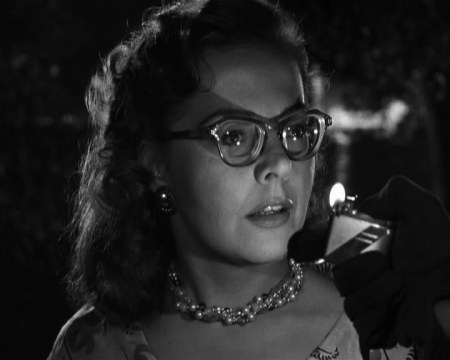
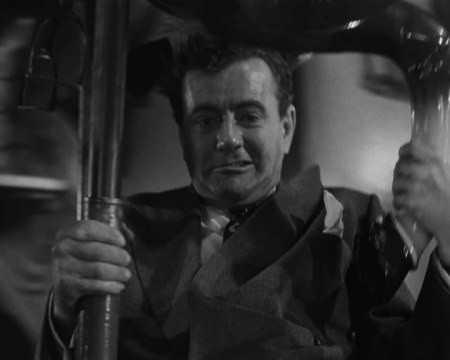
In relation to this the film might be considered a comment on violence as entertainment. In the opening dialogue on the train Bruno talks about how he has “a theory that you should do everything before you die” while the plot is bookended with scenes at a fun fair – the first sees Bruno murder Miriam following a ride on the tunnel of love, but of particular interest to me is the second featuring a fight on an out of control carousel, something comparable to the larger story and matters getting out of hand as Bruno seeks progressively greater thrills. It’s an allegory which gives the movie a greater sense of cultural context and the era’s moral boundaries which were being continually tested, continually under increasing pressure to be pushed.

Being a Hitchcock production the direction is naturally meticulous with layers of symbolism in almost every shot, however a couple of visual features specifically caught my eye. A simple but effective touch none the less is the opposing light dark appearances of the hero and villain: in a couple of the scenes in which they face off Guy will be dressed in light colours while Bruno will be contrastingly dark. Beyond obvious representations of good and evil more interestingly this suggests a negative image of each other, drawing attention to their emotional similarities but also emphasising their considerable moral differences.

Bruno’s black suits also result in some striking shots when seen from a distance against a light background – a solitary dark presence immediately recognisable even as a little more than a vague figure. Inevitably window blind shadows feature heavily too, but it’s intriguing that they are rarely cast across Guy’s face, whereas Bruno’s features are continually fractured by dark lines hinting at his villainy and possible madness.
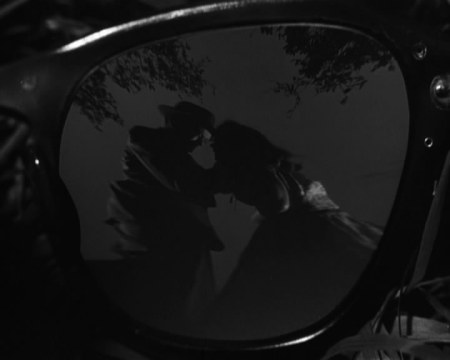
Perhaps my favourite reoccurring motif though is the prominence of glasses in connection to the film’s initial murder shown in the reflection of the victim’s spectacles; besides being an immensely innovative touch and remarkable technical feat for the time it makes an interesting suggestion of untold guilt on the villains part. Bruno’s later fit like reactions to the resemblance of the bespectacled Barbara to Miriam being both a vital plot point but also an indication of some remorse in the matter and greater character complexity. On the other hand, perhaps Hitchcock’s main reason for showing Miriam being strangled in a reflection was a way to duck under the era’s censorship; allowing the unfettered brutality of the murder to be seen thanks to the excuse of it being indirect.

While the plot largely eschews the detective/mystery traditions of the genre, perhaps what makes the movie a true film noir is its supreme play against expectations throughout. Scenes such as Bruno holding Guy at gunpoint, or the tennis match sequence carefully sustain tension with each being resolved in a truely unexpected manner. It’s no exaggeration to say these scenes are still likely to provoke plenty of armrest gripping and biting of nails today, while at the same time it’s slightly alarming how well it stands against many supposedly innovative modern thrillers.

After such a wealth of chaotic excitement it’s something of shame that Hitchcock seems forced to settle for a relatively typical Hollywood conclusion but regardless, as an innovative take on a story of murder and blackmail Strangers on a Train presents a compelling example of Noir which steps outside of the tried and tested formula and offers something slightly different to the genre’s usual fare.

Concept: Deadly Serious

April 8, 2011

Just a little something to keep things moving here:

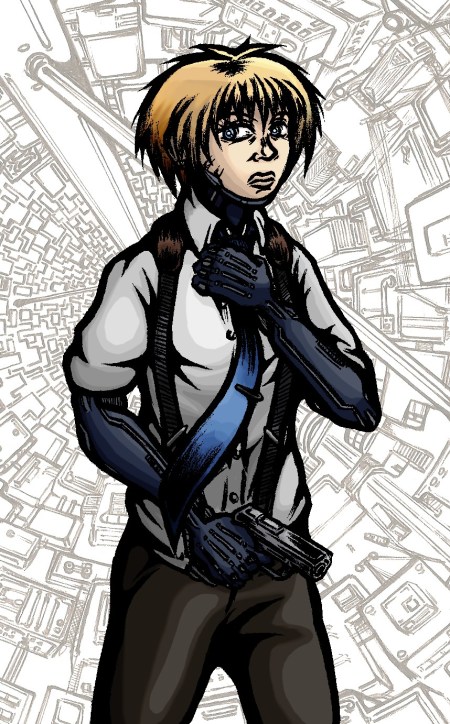
Despite suffering a particularly malignant ‘hands won’t draw’ day earlier this week I eventually got this small concept together. Nothing particularly new or adventurous content wise I’m afraid but it did give me an opportunity to experiment with my colouring technique a little more and to consider Scratch’s general look without the coat on.

In my recent concepts I’d been reliant on layers of colour filters and brush strokes, here however I made stronger use of the dodge and burn tools to create highlights and shadow resulting in an altogether different appearance to the character. As before I can’t shake the feeling it came out a little too bright, but I’m otherwise pleased how the colour scheme fits together with the sharp blues playing off the more muted greys and browns in a distinct arrangement.

And yes, I finally succumbed to the cliché and included a gun in a concept. Forgive me D:


Big in Japan: Akira

April 4, 2011

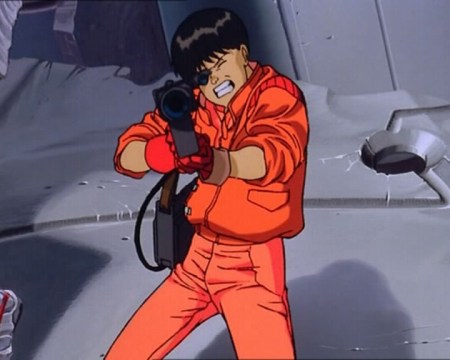
Being a good three years or so since I last watched Akira it was with fresh eyes that I approached Katsuhiro Otomo’s landmark anime, resulting in a viewing experience which proved familiar but also differed from my former recollections. The film is ostensibly cyberpunk according to its themes and presentation however the main reason I was compelled to include it in my research is down to its setting, scenery and mechanical design.

While the era stylings and cel animation are immediately identifiable it’s a testament to its high production values and meticulous attention to detail that Akira remains visually astounding to this day even by modern standards. Being made before digital animation became common practice makes it all the more impressive; characters and machinery are almost always in motion, brought to life by uncannily fluid animation while the backgrounds are complex and frequently baffling in scale.

Outside the quality of the production though, what really surprised me was how well the design work holds up. Bygone date of World War III aside the movie presents a future that’s remarkable but maintains an odd sense of believability thanks to some of the restraint shown in its concepts. True to cyberpunk’s tendency of presenting familiar real world elements in warped ways there’s something of modern skyscraper design evident in the buildings, the difference arising from their terrifying scale, pan up shots revealing them to effectively block out most of the skyline. Special mention should go to the range of locations presented too with neon glitz and sterile labs juxtaposed against seedy bars and rundown streets. The world portrayed is clearly advanced but suffers from the same problems any major city would today.

The colour palette also caught my eye as being remarkably rich thanks to much of the film being set at night with coloured light sources atmospherically illuminating scenes. Eschewing the uniformly bright colour schemes many would associate with ‘cartoons’ lighting swings between harsh oranges and reds against deep blues, purples and browns for shadowing. In effect it emphasises the film’s dark mood during the opening bike chase while making the neon cityscape and bikes themselves contrastingly pop out within the compositions.

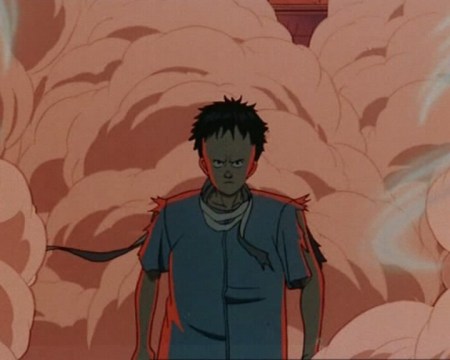
Akira’s unsettlingly gritty sense of realism is not just down to design or colour though. Certainly much of the later content surrounding Tetsuo’s powers steps outside of this considerably but I found much of the background activity a great deal more disturbing than on my previous viewing. Incidental moments of violence don’t pull any punches in what’s shown while the near continuous anti-government rioting (and its merciless suppression) are worrying in their resemblance to real life news footage. It shocks and gives the film an aggressive political undertone while also enforcing the sense of a world extending beyond the main characters, with wider implications to the disasters taking place. The opening and ending scenes of Neo Tokyo’s destruction carry all the more weight thanks to parallels with the Hiroshima and Nagasaki bombings (while uncomfortably calling the recent earthquake and tsunami devastation to mind); the carnage is never mindless or unfeeling as a result. Essentially, by establishing a credible universe the viewer is tricked into caring through comparison with genuine catastrophes.

Considering the film’s main thread, there are two sides to the story. On the one hand we have the broader political and philosophical implications of power out of control while on the other there’s a more focused personal tale underpinning the bigger picture. The experimentation on Tetsuo by the government and development of his psionic powers represent a larger theme regarding mankind’s irrepressible hunger for advancement and understanding, both he and the foregone Akira being grasps towards what is best described as ‘godhood’. While this pushes over into a realm perhaps more fantastical in nature than typical sci-fi the connection with technology is clearly affirmed throughout. The mechanical arm Tetsuo attaches in place of his missing one leans towards cyborg concepts while the continual barrage of ineffectual countermeasures the army unleashes both revels in and dismisses civilisations accomplishments.

What makes this more than a soulless disaster movie though is the running conflict between Tetsuo and his childhood friend Kaneda: the former being driven to supplant the eponymous Akira out of a deep seated sense inferiority, the latter out for revenge against his former friend over the death of a fellow biker. Both characters transform over the course of the movie with Kaneda changing from arrogant biker to something of a hero figure while Tetsuo gradually becomes more and more of a monster – as much through his own anger as by the experiments of the government conducted on him, metaphorically and visually.

I must admit that the ending formerly baffled me and to some degree still does with even Otomo allegedly admitting he was forced to scale back and compromise. However approaching it again with an open mind I found it to be more satisfying than I remembered, being comparable perhaps to 2001: A Space Odyssey with the suggestion of some form of ascension or rebirth taking place and a surreal light tunnel sequence recalling the one in Kubrick’s film. This theme of rebirth is given further weight by Tetsuo’s final grotesque mutation, seeing him become a swelling blob akin in some respects to a gigantic baby, a horrifying demonstration of uncontrollable power, the resurrection of Akira meanwhile fulfilling a role which draws parallels to the resurrection of Jesus in Christian theology.

In conclusion: Akira represents much of Japanese animation’s strengths and weaknesses, a visual feast packed with ideas and political charge which can also be alienating due to its more brutal moments and high ambiguity. Regardless, taken aside from the hype and misguided preconceptions it lives up to the legend as a landmark in animation paving the way for the likes of Ghost in the Shell and a great deal of ensuing cyberpunk.

tsunami

Concept: Sasaki’s Den

April 2, 2011

Here’s a somewhat psychedelic addition to my concepts:

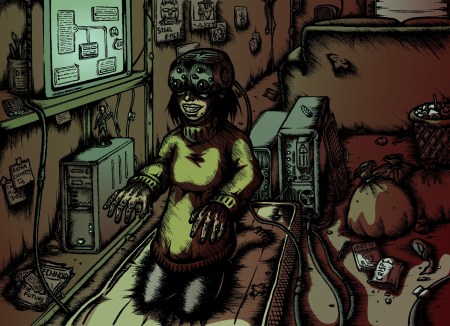
As I outlined in the original post for her design; Sasaki is someone of immense skill when it comes to computers and technical activities at the cost of just about everything else – hence her ‘den’ being something of a garbage heap. In one regard at least she serves as comic relief for the story, but her dysfunctional nature and living space also highlight the drawbacks of a life built around technology.

Unlike Scratch, Sasaki only has minor cybernetic augmentations rather than full replacement prosthetics – her use of externalised equipment pushing the character closer to reality than other more developed cyborgs in the narrative. Besides the Augmented reality helmet – and unseen virtual keyboard assumedly projected in front of her (expect a concept) – I was intentionally restrained with much of surrounding scene, making it not too dissimilar to the kind of slobbish dwelling that would exist today.

In line with the graphic’s themes, the concept is intended to depict contradictory symptoms of advancement and neglect, reflecting a very real social problem that’s arisen from our internet culture. Sasaki embodies a worrying misallocation of priorities, disregarding much of our real lives in favour of a more manageable online identity and its attached functions. Technology is an inherently blameless thing, but as with almost anything it can be taken to extremes and end up being abused for warped purposes to the point where it becomes consuming.

I took a risk by going for a more lurid colour scheme this time around, using a complimentary play of green monitor lighting against dark red shadow. Again this emphasises the technological domination of the space, while giving the scene both exciting and sickly qualities in line with the subject’s personality. Its got a few rough edges but it marks an interesting departure from the norm away from more conventional colouring and ultimately possesses a stronger sense of atmosphere.


Everyone is Connected: 100 Bullets

March 31, 2011

Much as I did with Sin City (1991) I’ve made mention of Brian Azzarello and Eduardo Risso’s comic 100 Bullets more than once now in connection to my research and artwork, so it’s high time I did a proper write up on it in recognition of this. I’ve previously read several books in the series (of which there are 100 issues across 13 volumes) but for the sake of keeping things succinct and relevant here I will be focusing on the debut book First Shot, Last Call (2000) as a sample of its storytelling approach and style.

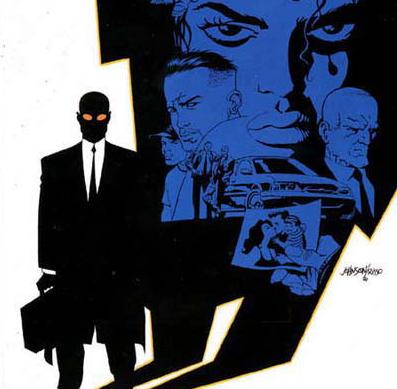
The story’s opening chapters centre around a simple but compelling premise: a man referring to himself only as ‘Agent Graves’ visits the victim of some grievous wrong doing and informs them who is responsible, giving them a briefcase containing supporting evidence, a pistol and 100 untraceable bullets along with immunity to any ensuing investigation – essentially a chance to have revenge and to get away with murder. It’s a setup which inherently challenges the characters’ morality and affirms its place as a neo-noir take of the bygone pulp genre.

What’s perhaps most clever about this basis though is its dual function. Considered in a standalone capacity this volume offers one-off stories of revenge centring around differing protagonists and reasons for retribution. Taken as part of a larger whole however there are enough clues towards an overarching plot to maintain readership for future instalments. It is thus that it captures the attentions of the casual reader in the short term while ensuring long term interest is retained to facilitate the series survival and success; the immediate emphatic appeal of downtrodden people given a chance to settle a wrong in their lives is counterbalanced by the mystery surrounding Graves and his ‘game’.

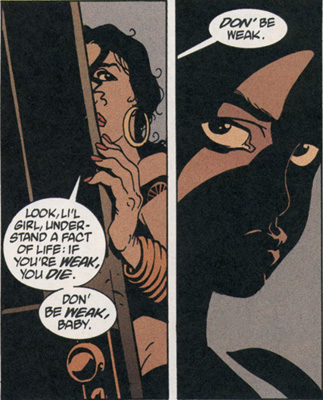
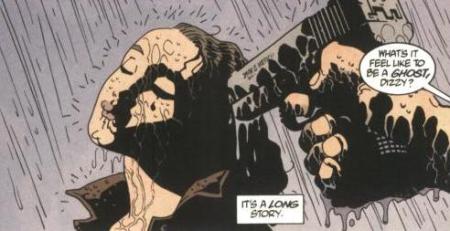
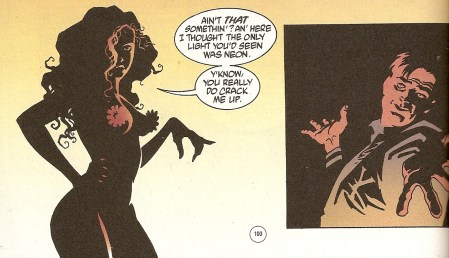
In this book for example, we are initially treated to the story of Dizzy Cordova; a former gang member mourning the shooting of her husband and child, freshly released from prison. The second character story meanwhile focuses on a bartender Lee Dolan; a man whose life was effectively destroyed by false charges of child pornography. Both these stories begin with Graves handing over the briefcase as a catalyst and yet both could be taken out of context and still function as satisfying pulp style shorts. It’s remarkable just how much they differ in execution and resolution too, with Dizzy getting her revenge and closure while Lee backing down results in bitter tragedy.

Graves and initial hints towards a sinister organisation ‘The Trust’ also serve as a running thread through these two narratives, maintaining a structure around the shorts while a coda chapter at the end alludes to the scale of ‘the game’ by linking a series of seemingly unconnected people – something which gives rise to one of 100 Bullets’ driving themes, that “everyone is connected” (p55).

To the series’ credit, in spite of the fairly outlandish premise the situations often possess a high degree of realism most notably in terms of character behaviour and development. That so many of the cast are flawed and prone to immoral behaviour potentially makes it sound nihilistic, but it would be more accurate to say this roots the narratives in a tangible sense of reality with death seemingly a hairsbreadth away and sustained tension being used to maximum effect before each story’s climax. It’s a subjective point, but in my case at least the character faults drew my sympathy. The convincing use of accent and dialect in the speech adds a great deal too; it takes some getting used to but again enforces a sense of credibility while also creating a powerful sense of place within each narrative, being filled with the sort of language you might very well hear around the real location.

Considering Risso’s art 100 Bullets perhaps isn’t obviously impressive. Viewed in the wrong light its drawings might be considered overly simplistic and half finished. What ultimately betrays the skill with which they are made though is the realisation that they are not simple for the sake of cutting corners, rather they are economical to enforce an image on the reader that is both powerful and memorable. Similar to (perhaps directly inspired by) Frank Miller’s Sin City the style appropriately pays homage to the high contrast depictions of film noir with large areas of shadow obscuring characters and backgrounds, while including surreal touches of illumination such as the teeth and eyes. These compositions and their capture of form are incredibly effective, managing to convey atmospheric scenes without resorting to slavish amounts of detail.

As I’ve formerly mentioned in other writing, the colour palette does an outstanding job of complimenting these stark depictions too: a specific scheme being used for each story giving them all a distinct visual flavour and tone, making it possible to differentiate them at a glance and once again keeping them memorable.

Dizzy’s portion of the book begins saturated in sun washed oranges and browns before giving way to greys and blues for the night storm at the end, something which connects with film noir’s tendency of gradually descending into night as the metaphorical ‘heart of darkness’ is reached. Lee’s story on the other hand is differentiated by deep reds and lurid yellow highlights, depicting the neon sleaze of his downtown bar job and frequent visits to an exotic dancer. It’s a method which gives the stories a distinct visual personality by reflecting some of the subject character and their situation in the colour scheme, emphasising the shift in perspective on an almost subconscious level.

It takes some adjustment but 100 Bullets is to my mind a defining example of modern comic book noir; staying true to the genre tropes of moral ambiguity, pervasive mystery and heavily stylised visuals while placing a modern and distinctly gritty twist on the formula. Like the artwork it never does more than it needs to, telling streamlined tales of greed and revenge with just enough intrigue to keep you reading.